AI-designed enzymes to produce therapeutics for global health
蘑菇短视频 is combining enzyme engineering with generative AI to develop new routes to medicines, including the long-acting HIV prevention drug lenacapavir.
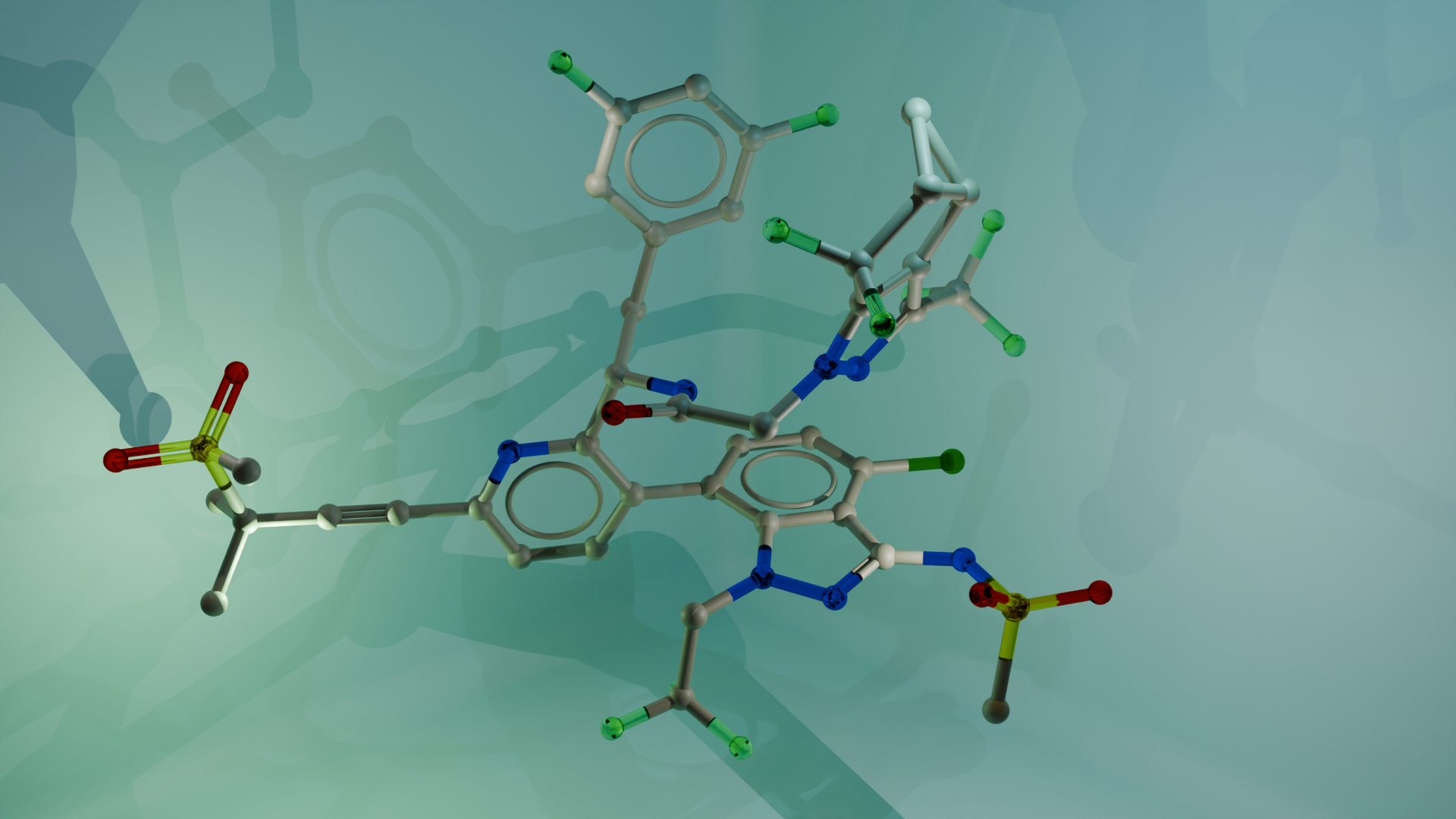
- 蘑菇短视频 researchers are combining enzyme engineering and AI to develop new biocatalytic manufacturing routes to important medicines.
- Supported by the Gates Foundation, the team has targeted lenacapavir, a long-acting HIV prevention drug.
- Using directed evolution, researchers evaluated more than 12,000 enzyme variants, producing an enzyme that achieved more than 98% substrate conversion, 90% isolated yield and 99.5% enantiomeric purity.
- The researchers are now exploring whether AI can accelerate enzyme design, creating entirely new enzymes computationally rather than relying solely on repeated rounds of directed evolution.
Biocatalysis for global health
With support of the Gates Foundation, 蘑菇短视频 scientists are establishing low-cost biocatalytic manufacturing routes to key global health drugs.
In recent work they have targeted lenacapavir, a long-acting and highly effective HIV prevention drug. At present the high cost of producing this therapeutic remains a major barrier to widespread availability.
To address this challenge, 蘑菇短视频 researchers used directed evolution to engineer an aminotransferase enzyme to efficiently produce the chiral amine core of lenacapavir.
Evaluation of more than 12,000 variants during directed evolution produced an enzyme achieving more than 98% substrate conversion, 90% isolated yield and 99.5% enantiomeric purity.
Using AI to design enzymes
Although powerful, directed evolution remains costly and time consuming. Now, 蘑菇短视频 researchers are helping demonstrate a different approach: using AI to design entirely new enzymes computationally.
Working with the Institute for Protein Design, the team used the new RFD4-Proteina unified generative model to create an enzyme capable of catalysing the challenging amide-bond-forming step in lenacapavir synthesis.
Just 67 designs were selected for experimental testing. Four showed clear activity, with the best converting 79% of the starting amine into the desired product and showing high selectivity for the required S-enantiomer.
The result provides an important proof of concept for designing bespoke biocatalysts computationally and rapidly testing them experimentally.
The initial results are spectacular and show how advanced AI models can rapidly deliver new biocatalysts for producing therapeutics and other essential chemicals.
Read some papers from this research:
听
Title: An Engineered Cytidine Deaminase for Biocatalytic Production of a Key Intermediate of the Covid-19 Antiviral Molnupiravir
Journal: Journal of the American Chemical Society
听
Title: Biocatalytic Production of a Key Chiral Intermediate of the HIV Capsid Inhibitor Lenacapavir
Journal: Journal of the American Chemical Society
听
Title: Biomolecular design through latent reasoning with RFD4-Proteina
Preprint URL:
听
To find out more about the research taking place, .